
The Golden Path
It's too late to save America.
“It has not occurred to you that your ancestors were survivors and that the survival itself sometimes involved savage decisions, a kind of wanton brutality which civilized humankind works very hard to suppress. What price will you pay for that suppression? Will you accept your own extinction?” - The Stolen Journals
Humanity hasn’t yet figured out how to handle the fact that survival often costs unpopular decisions. The system of a republic strikes some balance between being responsive to the will of the people, while still leaving hard decisions out of their hands. But this has its own issues: the electorate can be unintelligent, insufficiently circumspect, or swayable with gifts. These can also be true of elected officials.
How do you handle a problem where the consequences are existential, but the only solution is wildly unpopular? Examples of this are monetary policy (everybody wants lower taxes, nobody wants their gibs cut) and trade policy (people aren’t willing to pay more for domestic goods for the sake of protectionism). Anyone who tries to tackle these problems will be out of office before they can be truly solved. How does a system, designed to not let someone have power for a long time, deal with long-term problems?
Historically, the answer lies in co-operation between members of opposing parties, united by shared interest in the success of America. Now, the answer is “it doesn’t.” People would prefer to just let their country go bankrupt. They’d rather let China manufacture everything. “Why should we pay Americans to do it if China can do it cheaper?” And so that’s what happens.
Civilizations suffer and die because interests become splintered, and people would rather keep getting their fix than give something up for the good of broader society. This is not commentary on people’s selfishness, it’s commentary on the devolution of a society by fracturing. In essence: countries don’t stay together indefinitely because countries are created with some historical context, and as that context changes, so vanishes the validity of the coalition.
The United States was able to reconnect after the Civil War because it was still a group of people united by their shared heritage, homeland, and beliefs in liberty. The United States of today isn’t even able to agree that we shouldn’t go into a debt spiral. That isn’t because Americans have magically become selfish in the past century—it’s intellectually lazy to think so—it’s because we no longer consider ourselves a country worth fighting for. The apparent selfishness is not an overvaluing of the self, it’s a devaluing of the shared purpose.
Every group exists in the context of its creation. The more time passes and circumstances change, the less it makes sense for the group to exist in its original form. Countries, companies, parties, NGOs, social clubs, interpersonal relationships—all follow this rule. NASA was once the pride of American engineering, now it’s a place to squander taxpayer money on bureaucracy and sinecures. SpaceX is more NASA than NASA. Everything is meant to stand in its time in history. You can’t preserve something, you can only recreate it. (The same is true for movements in art, music, fashion, philosophy, etc.)
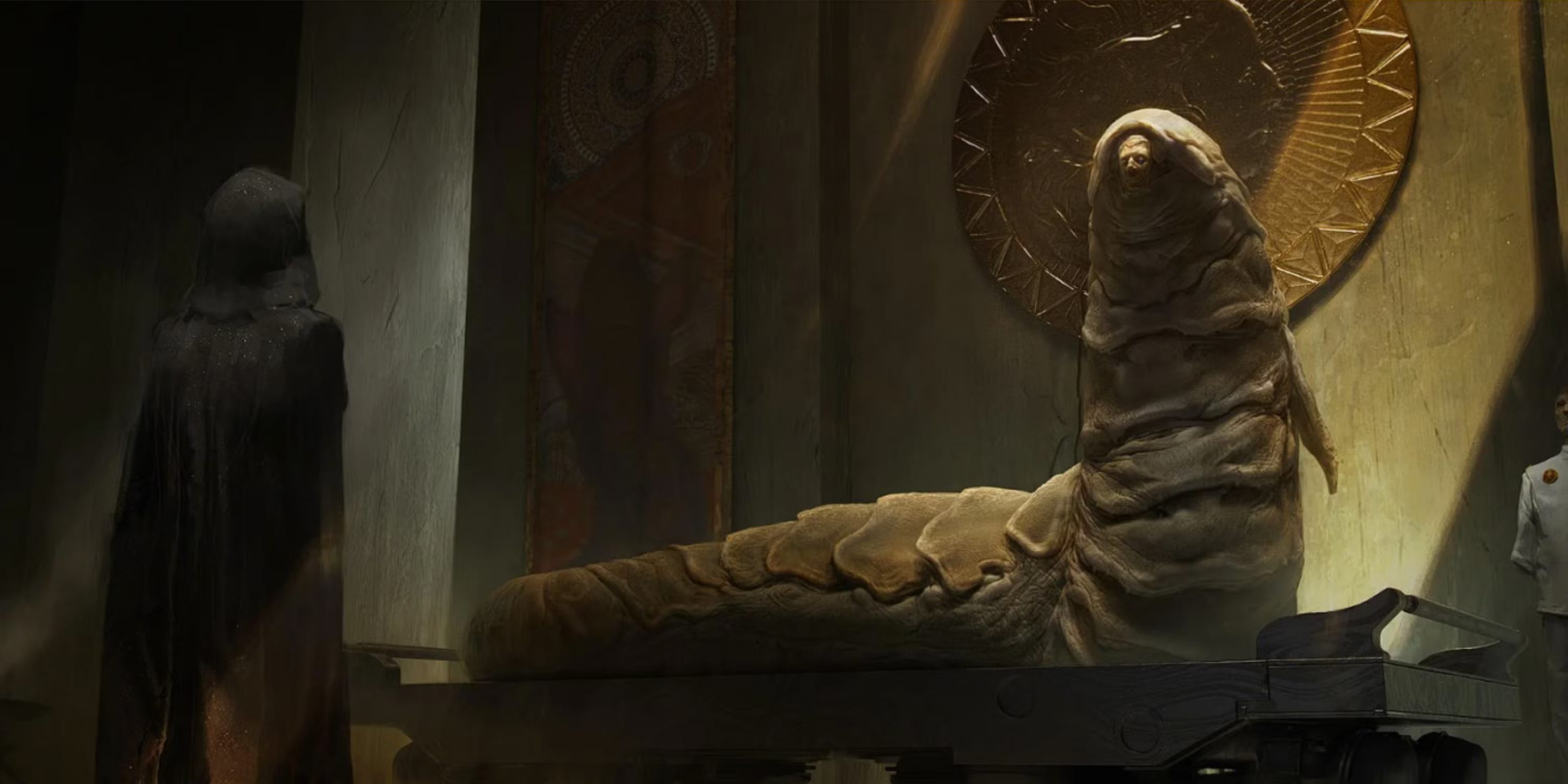
America has deep problems—debt, the economy, immigration—and the coalition of people that would be responsible for fixing said problems have no interest in working together to fix them. This is the sign that America qua America is dead. When a society reaches this point, there are two possible paths. The first is just to leave the problems unfixed. The country falls down in rank on the global scene, and things get worse for inhabitants, but nothing gets done about it. Or we go through the farce of one party trying to fix things, but the other party ripping up their progress every alternating election. The result is the same.
The second path—The Golden Path—is to reinvent America. A leader appears with enough charisma to create a new coalition and take control legitimately, or a small, dedicated group seizes power by force and changes a governmental structure to favor them. These are the only two ways that our long-term problems can be solved. If we aren’t willing to hand authority over to a leader with unconventional, ambitious ideas, then that leaves force as the only remaining method. That is, the problems will fester until someone gets angry enough to take over and fix them, which looks a lot like path one until it suddenly doesn’t.
The important point is, we can choose either path, but there is no turning around. America won’t “die” if we elect someone with radical ideas; it’s already dead. And electing someone with radical ideas won’t save America; it’s already dead. The only choice you have is whether you want America to continue down the path of third worldification, or if you want to reinvent it, but it will never be the same. There is no going back to Reagan.
> You can’t preserve something, you can only recreate it.
I'm reminded of Heraclitus' river: can't step in it twice, and likewise the status quo (the past, the present to some extent) is not necessarily congruent with what lies ahead. There's a Gestalt theory, the Paradoxical Theory of Change, which I think maybe explains where America is at due to the lacking collective identity of the country (we can't again move forward until we agree upon who we are): https://web.archive.org/web/20240607095215/https://www.gestalt.org/arnie.htm
What do you think it would it take to bring the necessary unity between parties to stabilize the country? (Path three.) Or is that option out the window?